
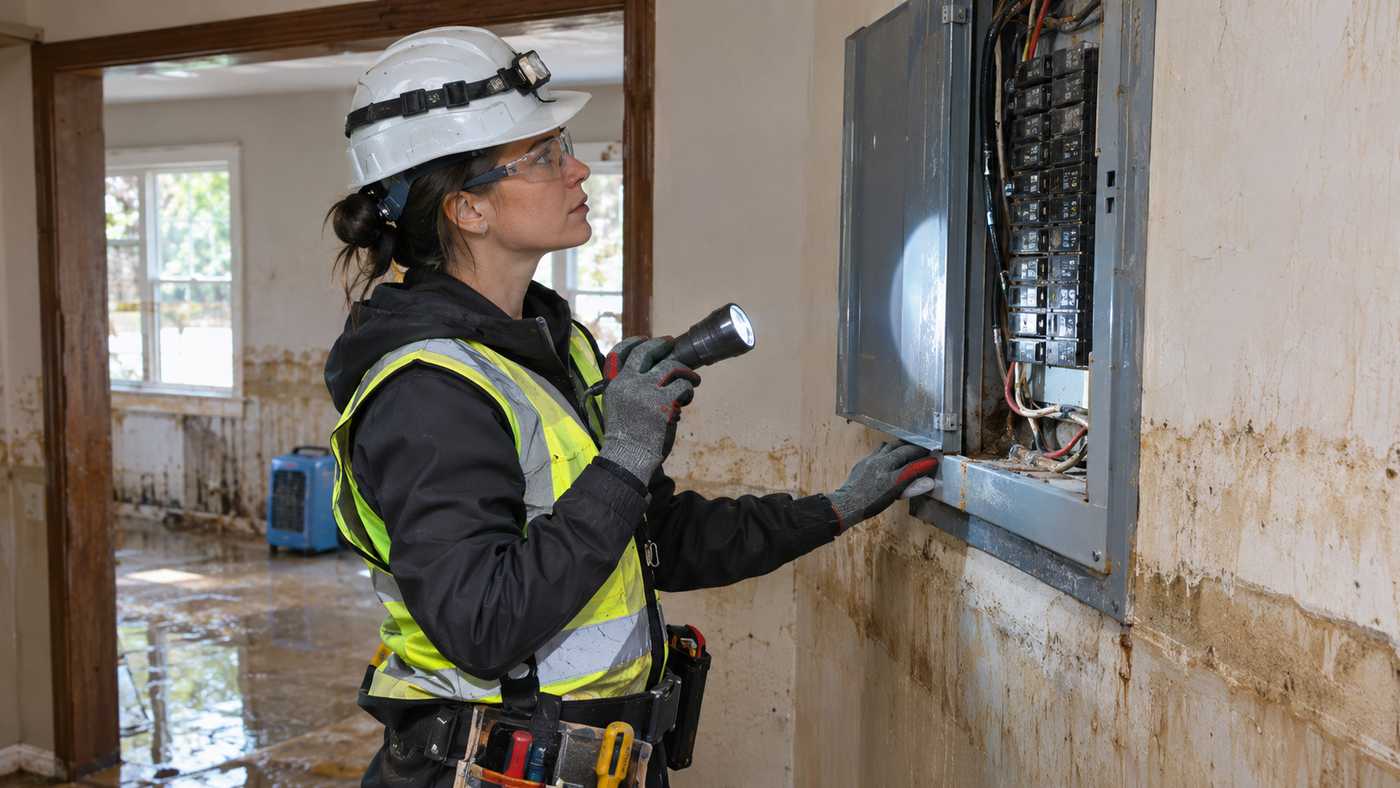
Flooding can leave a property unsafe even after the water begins to recede. Standing water, damaged electrical systems, weakened building materials, and contaminated surfaces can create serious risks for anyone entering the affected area. Safety assessments should therefore come before cleaning, repairs, or moving belongings. Identifying immediate hazards helps prevent injuries and further property damage.
Water damage can develop from several sources, each requiring different precautions. Heavy rainfall, sewer backups, and flooding leaks and burst pipes can affect flooring, walls, electrical equipment, and structural materials. While some incidents involve relatively clean water from supply lines, others introduce sewage or chemical contaminants. Understanding the source helps property owners determine which areas need professional attention.
1. Check Whether the Property Is Safe to Enter
Before entering a flooded building, examine its surroundings from a safe distance. Look for fallen power lines, damaged entrances, accumulated debris, and visible changes to the building’s exterior.
The Environmental Protection Agency (EPA) recommends waiting until qualified professionals confirm that a flooded property is safe to reenter. Structural damage and electrical hazards may remain even when standing water is no longer visible.
Initial Entry Safety Checklist
- Confirm that local authorities have lifted evacuation or access restrictions.
- Check for damaged doors, windows, walls, and roofing.
- Stay away from fallen electrical lines and submerged equipment.
- Avoid entering rooms with sagging ceilings or unstable floors.
- Leave immediately if you suspect a gas leak.
If the building appears unstable, remain outside. A professional assessment is safer than attempting to inspect potentially dangerous areas yourself.
2. Identify Electrical Hazards and Exposed Wiring
Water and electricity create a dangerous combination. Flooding can reach outlets, switches, appliances, electrical panels, and concealed wiring. Even equipment that appears dry may contain moisture.
Guidance from the EPA warns against touching electrical equipment when it is wet or when standing in water. Electricity should be disconnected only when the main switch can be reached safely without entering a hazardous area.
What Should You Inspect?
- Outlets and switches exposed to floodwater.
- Damaged extension cords or visible wiring.
- Electrical panels located near flooded areas.
- Appliances that were partially or completely submerged.
Do not test flooded appliances or restore electrical service without professional clearance. A licensed electrician should evaluate affected components before normal use resumes.
3. Assess Possible Structural Instability
Floodwater can weaken building materials and affect the stability of floors, walls, and foundations. Prolonged moisture exposure may also damage timber, drywall, insulation, and other materials.
The National Institute for Occupational Safety and Health (NIOSH) recommends inspecting flood-damaged buildings to determine whether structural repairs are necessary.
Look for visible cracks, leaning walls, warped flooring, sagging ceilings, and doors that suddenly become difficult to open. These signs do not always indicate structural failure, but they deserve further investigation.
Never remove damaged supporting materials without understanding their function. If structural movement or serious deterioration is suspected, ask a qualified structural engineer or building specialist to assess the property.
4. Determine Whether Standing Water Is Contaminated
Floodwater should never be assumed safe based on appearance alone. Water entering from streets, drains, or overflowing waterways may contain sewage, harmful microorganisms, and chemical residues.
The Centers for Disease Control and Prevention (CDC) explains that floodwater can carry bacteria and waste from agricultural, industrial, and sewage sources. Exposure may create additional health concerns, particularly when contaminated water reaches open wounds.
Practical Contamination Precautions
- Avoid direct contact with potentially contaminated water.
- Keep children and pets away from affected areas.
- Wear appropriate protective gloves, boots, and eye protection.
- Discard contaminated items that cannot be properly cleaned.
- Seek professional assistance for sewage-related contamination.
For flooded private wells, follow local water-testing guidance before drinking or using the water for household purposes.
5. Inspect Accessible Areas for Plumbing Damage and Active Leaks
Not every water-damage incident begins outdoors. Broken supply lines, damaged plumbing connections, leaking fixtures, and failed water heaters can introduce significant moisture into a building.
Once access is safe, examine visible pipes, faucets, toilets, water heaters, and plumbing connections. Look for active dripping, unusual moisture, water stains, or reduced water pressure.
If a supply pipe is leaking, shut off the water at an accessible valve when safe. Avoid disturbing damaged plumbing or opening walls to investigate concealed problems.
The CDC emphasizes repairing plumbing and other moisture sources to prevent recurring mold problems. A licensed plumber can locate hidden failures and determine whether damaged components need replacement.
6. Check for Moisture-Related Mold and Indoor Air Concerns
Moisture can remain trapped behind walls, beneath flooring, and inside insulation long after visible water disappears. These damp conditions support mold growth and may affect indoor air quality.
The EPA advises cleaning and drying flooded materials within 24 to 48 hours whenever possible. If materials remain wet beyond this period, property owners should assume mold may be developing.
Inspect accessible surfaces for discoloration, persistent dampness, and musty odors. Avoid disturbing visibly moldy materials without appropriate protection.
Open windows when conditions permit. Use fans and dehumidifiers only after electrical safety has been confirmed. The EPA cautions against using fans around visible mold because airflow can spread spores. Extensive contamination or moisture hidden within building assemblies may require professional remediation.
Property owners should watch for unusual odors, airflow problems, and other HVAC safety warning signs that may indicate the system needs professional attention. A qualified HVAC technician can assess affected equipment before normal operation resumes.
7. Document Damage and Evaluate Cleanup Requirements
Once the property is safe to inspect, document visible damage before removing materials. Clear records can support insurance claims, repair planning, and future maintenance decisions.
The EPA recommends photographing affected rooms and belongings before beginning cleanup. Property owners should also contact their insurance provider to understand applicable documentation requirements.
What Should Your Damage Records Include?
- Photographs of damaged rooms and building materials.
- Visible water levels and affected electrical equipment.
- Damaged furniture, appliances, and personal belongings.
- Dates, observations, and actions taken after flooding.
- Repair assessments, receipts, and professional inspection reports.
Evaluate whether cleanup involves contaminated water, extensive material removal, or specialized drying equipment. These conditions may require qualified restoration professionals rather than routine household cleaning.
Why Professional Clearance Matters Before Normal Use
Flood recovery should follow a clear sequence: identify hazards, confirm safe access, stop the water source, document damage, and begin appropriate cleanup. Rushing these steps can expose occupants to avoidable risks.
Electricians should inspect affected electrical systems, plumbers should address damaged supply lines, and structural specialists should evaluate suspected instability. Qualified restoration professionals can assess contamination and hidden moisture.
Careful inspections protect occupants while supporting more reliable repairs. Before normal activities resume, property owners should confirm that identified hazards have been addressed and affected areas are safe for use.